
ABOUT GBC
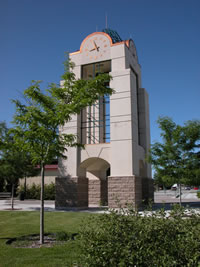
Welcome to Great Basin College!
Great Basin College values you! Valuing what we have in common and our differences means we will foster a college climate of mutual trust, tolerance, informed discourse and always seek to promote GBC as a "safe space" to explore new ideas and perspectives with opportunities for you to grow, learn and be successful in a friendly, supportive campus environment. GBC enriches people's lives by providing student-centered, post-secondary education to rural Nevada. GBC students enjoy outstanding academic programs, smaller class sizes, and excellent faculty who really care about our students. We are GBC!
ADMISSIONS

ACADEMICS

For High School Students
STUDENT SERVICES

GBC ONLINE

Great Basin College is "The Gold Standard in the Silver State" when it comes to long-distance education and online education delivery. GBC offers hundreds of classes and a diverse array of certificate and degree programs fully online and fully affordable!
COMMUNITY
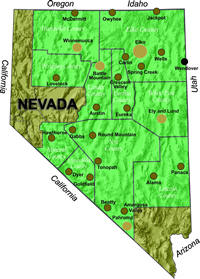
Great Basin College wants to be your choice for higher education. GBC offers associate and baccalaureate level instruction in career and technical education and academic areas. About 4,000 students are enrolled annually online from across the country and on campuses and centers across 86,500 square miles, two time zones, and ten of Nevada's largest counties. We border Arizona, Oregon, Idaho, Utah, and California. We are GBC!
INFORMATION

Need to find COVID-19 information quick? Check out our Coronavirus (COVID-19) Information and Resources page!

RESOURCES

Student Conduct Policy
Great Basin College (GBC) is a System institution of the Nevada System of Higher Education (NSHE) and encourages all students to pursue academic studies and other college sponsored activities that promote intellectual growth and personal development. Students are responsible for complying with NSHE and college guidelines and meeting the appropriate college requirements. In joining the academic community, the student enjoys the right of freedom to learn and shares responsibility in exercising that freedom. A student is expected to conduct him or herself in accordance with college standards.
When a complaint or charge of student misconduct is brought forth, it shall be processed in accordance with the policies and procedures prescribed in the NSHE Board of Regents Code Title 2, Chapter 10. (This policy can be found in the current GBC Course Catalog) For purposes of this document, the term "student" means any person who is or was enrolled in courses, either full-time or part-time, including correspondence study, electronic means, Study Abroad, or auditing, or courses offered through any institution satellite campuses or auxiliary means.
Prohibited Conduct
The following conduct is prohibited:
(a) Acts of dishonesty, including but not limited to the following:
1. Cheating, plagiarism, fraudulently obtaining grades, falsifying research data or results, assisting others to do the same, or other forms of academic or research dishonesty;
2. Furnishing false information to any institution or System official, faculty member, or office;
3. Forgery, alteration, misuse, theft, or using without permission, any institutional document or record.
(b) Disorderly, lewd or indecent conduct, including the disruption, obstruction, or unauthorized interruption of teaching, convocations, recruiting interviews, social events, research, meetings, business and administration, disciplinary proceedings, or other institutional or System activities, including public service functions and outreach activities on or off campus, or other activities when the conduct occurs on institutional premises.
(c) Conduct that endangers the health or safety of any member or guest
of the System community.
(d) Physical abuse, verbal abuse, threats, intimidation, coercion, and/or
conduct that threatens or endangers the health or safety of any person.
(e) Interference by force, threat or duress with the lawful freedom of
movement of persons or vehicles on institutional premises.
(f) Resisting or obstructing institutional or other public officials in the
performance of their duties.
(g) Failure to comply with the directions of institutional officials acting in
accordance with their duties and/or failure to identify oneself to these persons when
requested to do so.
(h) Acts of physical force or disruptive acts which interfere with institutional activities, freedom of movement on the campuses, freedom for students to pursue their studies, freedom of speech, freedom to be heard, and freedom to pursue research of their own choosing.
(i) Failure of the student to present proper credentials, student identification card, driver’s license, or parking registration, to institutional officials upon their request.
(j) Forgery, alteration, falsification or destruction of System documents or furnishing false information in documents submitted to the System.
(k) Willful damage, destruction, defacement, theft or misappropriation of equipment or property belonging to, in the possession of, or on premises occupied by the System.
(l) Knowing possession on any premises of the System of any firearms, explosives, dangerous chemicals or other instruments of destruction, or other dangerous weapons as defined by the laws of the State of Nevada, without the written authorization of the institutional president or the president’s authorized agent.
(m) Continued occupation of buildings, structures, grounds or premises belonging to, or occupied by, the System after having been ordered to leave by the institution’s president, the president’s designee, or the chancellor.
(n) False reporting of any emergency situation, including but not limited to, misuse of campus or System emergency notification equipment. Unauthorized tampering with, and/or accessing of, safety, security, or fire protection equipment or devices. Setting off a fire alarm for reasons other than actual fire or emergency, involvement in setting or causing any unauthorized fire in or on institution property.
(o) The unauthorized possession, loan, modification, or distribution of keys, pass cards or institutional identification cards. Unauthorized or unlawful entry or access to institutional or System facilities, including buildings and grounds. The reproduction, manufacture or duplication of any key, pass card, institutional or System identification card or unlocking devise for use on institution or System facilities or locks without proper authorization.
(p) Abuse, unauthorized use, or theft of institutional or System computer facilities
and resources, including but not limited to:
1. Unauthorized entry into, or transfer of, a file to use, read, or change the contents or for any other purpose; and/or a violation of copyright laws;
2. Use of another individual’s identification and/or password;
3. Interfering with the work of another student, faculty member or institution or System official, or with the normal operation of the institution or System Computing System; or,
4. Violating the institution’s Standards of Conduct for the use of Institution’s Computers.
(q) Willfully destroying, damaging, tampering, altering, stealing, misappropriating or using without permission any System, program or file of the System.
(r) Violation of the institution’s policies and regulations governing residence in institution owned or controlled property, and access to and use of all institutional facilities, including responsibility for the conduct of guests.
(s) Use, possession, or distribution of alcoholic beverages without authorization (except as expressly permitted by System or Institutional regulations, such as the Alcoholic Beverage Policy), or public intoxication. Alcoholic beverages may not, in any circumstances, be used by, possessed by, or provided to, any person under 21 years of age.
(t) Use, possession, manufacturing or distribution (hereinafter “use”) of marijuana, heroin, narcotics, or other controlled substances, use or possession of any illegal and/or unauthorized drugs, prescription drugs, and drug paraphernalia or being under the influence of illegal drugs except as expressly permitted by law. Use, possession or cultivation of medical marijuana on any NSHE or NSHE foundation owned or leased property, or at any NSHE sponsored or authorized activity, is expressly prohibited.
(u) Contempt of student disciplinary proceedings including impairing or interrupting any proceeding or providing false information to institution or System officials and student hearing board members during the course of the conduct resolution process. Failure to comply with the terms of any sanction imposed in accordance with the rules of conduct.
(v) The repeated use of obscene or abusive language in a classroom or public meeting of the System and which, if occurring in a class, is not significantly related to the teaching of the subject matter.
(w) The use of threats or violence against a faculty member or the faculty member’s family in order to secure preferential treatment for grades, loans, employment, or other service or privilege accorded by the System.
(x) Any act of unlawful discrimination based on race, creed, color, gender
(including pregnancy related conditions), age, sexual orientation, whether actual or
perceived by others, military status or military obligations, sexual orientation, religion or national origin, gender identity, or genetic information, or any act of
employment or educational retaliation against any person who has made a complaint about such discrimination.
(y) Sexual harassment, defined as unwelcome sexual advances, requests for sexual
favors, and other visual, verbal or physical conduct of a sexual or gender bias
nature constitute sexual harassment when:
1. Educational Environment:a. Submission to such conduct is made either explicitly or implicitly a term or condition of an individual’s academic status (“quid pro quo”); or
b. Conduct that is sufficiently severe, persistent or pervasive so as to interfere with or limit a student’s ability to participate in or benefit from the services, activities or opportunities offered by the institution (“hostile environment”).2. Workplace Environment:
a. Submission to or rejection of the conduct is used as a basis for academic or employment decisions or evaluations, or permission to participate in an activity (“quid pro quo”); or
b. Conduct that is sufficiently severe, persistent or pervasive so as to create a work environment that a reasonable person would consider intimidating, hostile or abusive, and which may or may not interfere with the employee’s job performance (“hostile environment”). Sexual harassment includes sexual violence, sexual assault, dating violence, domestic violence, stalking and coercion.
(z) Sexual assault, which is the use of, or threat to use, force or violence of a sexual nature, defined as sexual assault, against any member or guest of the institutional community on institution-owned or institution controlled property or at any institution sponsored program.
(aa) Acts of hazing. Hazing is defined as any method of initiation into or affiliation with the university, college or community college community, a student organization, a sports team, an academic association, or other group engaged in by an individual that intentionally or recklessly endangers another individual.
(bb) Intentionally making an accusation that is false or is made with reckless
disregard for the truth against any member of the System community by filing a
complaint or charges under the rules of conduct or under any applicable
established complaint or grievance procedures in the System.
(cc) Willful incitement of individuals to commit any of the acts herein prohibited.
(dd) Any other conduct that violates applicable stated prohibitions, policies,
procedures, rules, or regulations of the institution or Board of Regents.
(ee) Any act prohibited by local, state or federal law that occurs on System
premises or at a System-sponsored function on or off such premises.
(ff) Dating Violence. Dating Violence is an act committed by a person who is or has
been in a "dating relationship" with the victim:
The existence of such a relationship shall be determined based on the
reporting party’s statement and with consideration of the length of the
relationship, the type of relationship, and the frequency of interaction between
the persons involved in the relationship. “Dating relationship” which means
frequent, intimate associations primarily characterized by the expectation of
affection or sexual involvement. The term does not include a causal
relationship or an ordinary association between persons in a business or
social context.
(gg) Domestic Violence. Domestic Violence is an act that includes but is not limited
to violence which occurs when a person commits one of the following acts against
or upon the person’s spouse or former spouse, any other person to whom the
person is related by blood or marriage, any other person with whom the person is or was actually residing, any other person with whom the person has had or is
having a dating relationship, any other person with whom the person has a child in common, the minor child of any of those persons, the person’s minor child or any
other person who has been appointed the custodian or legal guardian for the person's minor child:
1. A battery.2. An assault.
3. Compelling the other person by force or threat of force to perform an act from which the other person has the right to refrain or to refrain from an act which the other person has the right to perform.
4. A sexual assault.
5. A knowing, purposeful or reckless course of conduct intended to harass the other person. Such conduct may include, but is not limited to:
a. Stalking.
b. Arson.
c. Trespassing.
d. Larceny.
e. Destruction of private property.
f. Carrying a concealed weapon without a permit.
g. Injuring or killing an animal.6. A false imprisonment.
7. Unlawful entry of the other person's residence, or forcible entry against the other person's will if there is a reasonably foreseeable risk of harm to the other person from the entry.
(hh) Stalking. Stalking is defined to be when a person who, without lawful
authority, willfully or maliciously engages in a course of conduct that
would cause a reasonable person to feel terrorized, frightened, intimidated,
harassed or fearful for the immediate safety of a family or household
member, and that actually causes the victim to feel terrorized, frightened,
intimidated, harassed or fearful for the immediate safety of a family or
household member, commits the crime of stalking. Stalking includes but is
not limited to:
1. Engaging in a course of conduct directed at a specific person that would cause a reasonable person to:
a. Fear for the person’s safety or the safety of others; or
b. Suffer substantial emotional distress.2. For the purpose of this definition:
a. Course of conduct means two or more acts, including, but not limited to, acts in which the stalker directly, indirectly, or through third parties, by any action, method, device, or means follows, monitors, observes, surveils, threatens or communicates to or about, a person, or interferes with a person’s property.
b. Substantial emotional distress means significant mental suffering or anguish that may, but does not necessarily, require medical or other professional treatment or counseling.
c. Reasonable person means a reasonable person under similar circumstances and with similar identities to the victim.
(ii) Sexual Violence. Sexual violence is a severe form of sexual harassment, and refers to physical sexual acts or attempted sexual acts perpetrated against a person's will or where a person is incapable of giving consent, including but not limited to rape, sexual assault, sexual battery, sexual coercion or similar acts in violation of state or federal law.
Sexual coercion is:
1. Engaging in a course of conduct directed at a specific person that would cause a reasonable person to:
a. the use of violence or threats of violence against a person or the person’s family or property;
b. depriving or hindering a person in the use of any tool, implement or clothing;
c. attempting to intimidate a person by threats or force, or
d. when committed with the intent to compel a person to do or abstain from doing an act that the person has the right to do or abstain from doing.
In the context of sexual misconduct, coercion is the use of pressure to compel another individual to initiate or continue sexual activity against an individual’s will. Coercion can include a wide range of behaviors, including intimidation, manipulation, threats, and blackmail. A person’s words or conduct are sufficient to constitute coercion if they wrongfully impair another individual’s freedom of will and ability to choose whether or not to engage in sexual activity. Examples of coercion include threatening to “out” someone based on sexual orientation, gender identity, or gender expression and threatening to harm oneself if the other party does not engage in the sexual activity.
Institutions May Prohibit Other Conduct
By Code, an institution may adopt policies which prohibit other conduct not included above which are approved by the President and institution's general counsel. Great Basin College policy states messages, attitudes, or any other form of communication deemed outside the bounds of common decency/civility as judged by common standards of classroom behavior (determined as they would in a regular classroom by the instructor) will not be tolerated. All complaints of alleged misconduct (Section 2.1 above) made against a GBC student by any person should be submitted to the Student Conduct Officer (Administrative Officer) who is the Vice President for Student Affairs, Title IX Coordinator, Berg Hall - Elko Campus 775.327.2116 or jake.hinton-rivera@gbcnv.edu.
The administrative officer shall investigate the alleged misconduct with the purpose of clarifying the facts and positions taken by the parties involved. The investigation shall be completed within 60 calendar days of the receipt of the complaint.
Complaints
Any member of the institution community may file a complaint against a student for violations of the rules of Conduct The complaint shall be prepared in writing and filed with the President or the student conduct officer. Any complaint should be submitted as soon as possible after the incident takes place. Our current GBC catalog has more information regarding complaints. (This policy can be found in the current GBC Course Catalog)
Investigations
The student conduct officer or designee may conduct an investigation to determine if the complaint has merit. At any time, the student conduct officer may determine that the best course of action to take is to informally resolve the complaint through mediation, conflict resolution, or an educational conference. Upon completion of the investigation, the student conduct officer will deliver a letter to the student. The letter shall state the factual allegations, the charges, the student conduct officer's proposed informal resolution process, if not completed earlier, and a copy of this chapter.
Informal Resolution
The charged student shall participate in and work with the student conduct officer or designee for an informal resolution of the complaint. At the conclusion of the successful informal resolution process, a written determination shall be signed by both the student conduct officer and charged student which may include any of the disciplinary sanctions described in this chapter. At any time prior to signing a written determination, the charged student has the right to request a hearing before a hearing board or hearing officer as the means to resolve the complaint.
Failure to Reach Resolution
If the student conduct officer and charged student do not reach an informal resolution or if the charged student requests a hearing, then the student conduct officer shall notify the charged student in writing that the matter will be addressed through a hearing before a student conduct board or a student conduct hearing officer. A time shall be set for a student conduct hearing to occur within a reasonable time from this notification, yet not more than twenty-five calendar days from the date of the decision to proceed with formal resolution of the complaint. Maximum time limits for scheduling of student conduct hearings may be extended at the discretion of the student conduct officer. Notice of the hearing may be given by electronic mail or by first class mail with the U.S. Postal Service with delivery confirmation to the last known address of the student or by personal delivery.
Hearings and Appeals
Hearings & Appeals shall be conducted in accordance with this section. A copy may be found at gbcnv.edu or nevada.edu.
Sanctions and Expunging the Record
The student conduct officer or designee will be responsible for monitoring the student in successfully carrying out the sanctions imposed as the result of a hearing or the final determination of the informal resolution process. Unless the student conduct officer otherwise states in writing, any final action resulting from a disciplinary hearing or the informal resolution process shall become part of the student's disciplinary record. Other than institutional expulsion or withholding of a degree, disciplinary sanctions shall not be made part of the student's permanent academic record, but shall become part of the student's disciplinary record. Upon graduation, the student's disciplinary record may be expunged of disciplinary actions other than residence hall expulsion, institution suspension, institution expulsion, or withholding of a degree, upon application to the student conduct officer and approval by the president. A student may request that his or her disciplinary record be expunged and any such notation be removed from the student's transcript during the student's last semester before graduation or any time following graduation. The burden demonstrating reasonable cause for considering the expunging of a disciplinary record lies with the student. In considering such requests, the institution may consider the:
- Stated reason for request and circumstances surrounding request;
- Date and seriousness of the violation;
- Student's behavior and disciplinary record since the violation, including successful completion of any imposed sanctions;
- The impact, if any, on the public that failure to give such notice may cause; and
- Consequences of denying request.
The grant or denial of a request to expunge a student's disciplinary record shall rest solely within the discretion of the institution, and the enumeration of the foregoing factors shall not in any way imply a duty on the institution to grant such a request by means of a balancing or other test. If a request is not granted, the student at yearly intervals thereafter may request that his or her disciplinary record be expunged. The denial of a request to expunge is not appealable.
Disciplinary Sanctions
The following are the disciplinary sanctions that may be imposed on a student found to have violated the rules of Conduct. More than one sanction may be imposed.
Warning
A notice, oral or written, that the student has violated the rules of Conduct.
Reprimand
A written reprimand for violation of specified regulations.
Restitution
Compensation for loss, damage, theft or misappropriation of property, or injuries sustained in an incident of student misconduct. This may take the form of appropriate service, monetary, or material replacement or combination of these.
Probation
Probation consists of a designated period of time and includes the probability of more severe disciplinary sanctions if the student is found to have violated any institutional regulation(s) during the probationary period.
Loss of Privileges
Denial of specified privileges for a designated period of time. This may include denying the student access to any campus, site, or building while permitting the student to enroll in off-campus classes such as internet or correspondence classes.
Discretionary and Educational Sanctions
Participation in specific educational programs, such as alcohol or other drug educational intervention conferences, assessments, educational activities, including on-line instructional workshops, and work assignments or service to the institution or the community, and other related discretionary assignments
Residence Hall Suspension
Separation of the student from the residence halls for a period of time, after which the student is eligible to return. The minimum period of suspension is one semester and the maximum period is two semesters. Conditions for readmission may be specified in the suspension.
Residence Hall Permanent License Cancellation
Permanent separation of the student from the residence halls.
Withholding of a Degree
Prior to the awarding of a degree, the institution may withhold a degree from a student.
Institutional Suspension
Exclusion for a definite period of time from attending classes and from participating in other activities of the System, as set forth in a written notice to the student The official transcript of the student shall be marked -DISCIPLINARY SUSPENSION EFFECTIVE ______ TO ______. The parents or legal guardians of minor students shall be notified of the action.
A student who is enrolled in his or her last semester before graduation or is not currently enrolled in the System and who was not registered during the previous semester or who graduated at the end of the previous semester may request that the notation of the disciplinary suspension be removed from the official transcript when two years have elapsed since the expiration of the student's suspension. Such request must be submitted in writing to the president or his designee. If the request is not granted, the student at yearly intervals thereafter may submit a request for removal of the notation.
Deferred Institutional Suspension
Deferred separation of the student from the institution until the close of the current semester or some other time frame for review of student progress in addressing the conduct matter.
Institutional Expulsion
Termination of student registration and status for an indefinite period of time. Permission of the president shall be required for readmission. The official transcript of the student shall be marked -DISCIPLINARY EXPULSION EFFECTIVE _____________. The parents or legal guardians of minor students shall be notified of the action.
A student who is enrolled in his or her last semester before graduation or is not currently enrolled in the System and who was not registered during the previous semester or who graduated at the end of the previous semester may request that the notation of the disciplinary expulsion be removed from the official transcript when four years have elapsed since the expiration of the student's expulsion or termination. Such request must be submitted in writing to the President or designee. If the request is not granted, the student at yearly intervals thereafter may submit a request for removal of the notation.
Emergency Removal
The president, or the student conduct officer, may impose an immediate emergency removal (hereafter, "removal") prior to the resolution of a charge of violation of the rules of conduct on the charged student. This removal includes the immediate exclusion from the institution and all of the institution's campuses, sites, locations, and property of a student for an interim period whenever the president determines that this is required to:
- insure the safety and well-being of members of the institution's community,
- protect institution property, or
- if the student poses an ongoing threat of disruption of, or interference with, the normal operations of the institution.
- protect any student from sexual harassment or retaliation for the report of sexual harassment
The grant or denial of a request to expunge a student's disciplinary record shall rest solely within the discretion of the institution, and the enumeration of the foregoing factors shall not in any way imply a duty on the institution to grant such a request by means of a balancing or other test. If a request is not granted, the student at yearly intervals thereafter may request that his or her disciplinary record be expunged. The denial of a request to expunge is not appealable.
Conditions of Emergency Removal and Hearing
When an emergency removal is imposed, the charged student shall be denied access to the institution, including classes and all other institutional activities or privileges for which the student might otherwise be eligible, as the President or the student conduct officer may determine to be appropriate. During the time of the removal from the institution, the student may not come onto institutional property for any reason other than meeting with the appropriate officials) regarding resolution of the emergency removal and the student conduct violation. The student conduct officer may permit the student to participate in distance learning classes that do not include entering onto institutional property and provide adequate protections to prevent any of the conditions of (a), (b), (c) or (d), above, from occurring. Any student so removed shall be afforded an opportunity to a hearing on the emergency removal no later than fourteen calendar days following the removal unless the student agrees to delay the hearing to a later time. A hearing officer shall hold the hearing under the hearing procedures of the rules of conduct where those may be applicable. The student conduct hearing officer shall make a recommendation to the President. The president's decision upon the hearing officer's recommendation shall be final. The removal does not replace the regular disciplinary process, which shall proceed under this chapter.
Procedures Available when Sexual Harassment is Alleged
NSHE Code, Title 2, Chapter 10.4.12 The following additional procedures are available in proceedings alleging sexual harassment:
- An alleged victim of sexual harassment shall have the opportunity to select an independent advisor for assistance, support and advice. The alleged victim shall be advised at the beginning of the complaint process that he or she may select an independent advisor and it shall become the choice of the alleged victim to utilize or not utilize the independent advisor. The independent advisor may be brought into the process at any time at the request of the alleged victim. The institutional affirmative action officer or the student conduct officer shall advise the alleged victim of this right. The means and manner by which an independent advisor shall be made available shall be determined by each institution or unit
- the complainant may choose to not permit the matter to be resolved by the informal resolution process or may terminate the informal resolution process at any time prior to a written determination being signed. If sexual assault is alleged, the informal resolution process may not be used;
- the complainant must agree to the charge being heard by a hearing officer if the student conduct officer and student agree;
- the complainant must be given the opportunity to participate in any pre-hearing procedures;
- In a hearing involving more than one charged student, the hearing officer or hearing board may require a charged student to be absent from any testimony that is not relevant to that charged student;
- the complainant must receive a list of all witnesses at the same time it is received by the student conduct officer and charged student;
- the complainant must be permitted an advisor during the hearing who shall have the same duties as the advisor for the charged student;
- the complainant may present witnesses and other evidence at the hearing;
- The findings and recommendation of the Title IX Coordinator pursuant to NSHE Handbook,Title4, Chapter8, Section 13 shall be considered at the hearing;
- the complainant shall be served a copy of the decision of the student conduct hearing board or hearing officer and of the vice president, if an appeal is filed, except for the discipline imposed upon the student unless the discipline directly relates to the complainant.
- if the complainant is aggrieved by the decision of the student conduct hearing board or hearing officer, the complainant has the right to appeal the decision to the appropriate vice president in the same manner as the student;
- in a complaint alleging sexual violence or non-forcible sex offense, the complete decision of the student conduct hearing board or officer and the decision on appeal shall be given to the complainant and may be released to anyone upon request.
If you have any questions about the NSHE Great Basin College Rules and Disciplinary Procedures for Members of the University Community, please contact the Student Conduct Officer (Administrative Officer): Jake Hinton-Rivera, Vice President for Student Affairs, Title IX Coordinator, GBC Elko Campus, room 160, 775.327.2116, jake.hinton-rivera@gbcnv.edu.
GBC is guided by the principle that there shall be no difference in the treatment of persons because of a person’s age, disability, whether actual or perceived by others (including service-connected disabilities), gender (including pregnancy related condition), military status or military obligations, sexual orientation, gender identity or expression, genetic information, national origin, race or religion and that equal opportunity and access to facilities shall be available to all. Similarly, there shall be no difference in the treatment of persons who file charges of discrimination, participate in a discrimination proceeding, or otherwise oppose discrimination. It is our policy to comply fully with the non-discrimination provision of all state and federal regulations with regard to recruitment, admission, financial aid, activities, hiring, promotions, training, terminations, benefits, and compensation.
For More Information Contact
Jake Hinton-Rivera
Vice President for Student Affairs, Title IX Coordinator
Great Basin College, Elko Campus
775.327.2116
jake.hinton-rivera@gbcnv.edu
Why Great Basin College
Great Basin College wants to be your choice for higher education. GBC offers associate and baccalaureate level instruction in career and technical education and academic areas. About 4,000 students are enrolled annually online from across the country and on campuses and centers across 86,500 square miles, two time zones, and ten of Nevada's largest counties. We border Arizona, Oregon, Idaho, Utah, and California. We are GBC!